Advanced Paintless Dent Repair in Massachusetts
Professional PDR services from a licensed shop with 33+ years experience. Door dings, hail damage, and dent removal that preserves your factory finish.
RPM Dent Repair: Your Premier PDR Shop
Paintless Dent Repair (PDR) is a specialized method for removing dents, dings, and hail damage without repainting or replacing body panels. At RPM Dent Repair in Raynham, we provide expert paintless dent repair that Massachusetts vehicle owners trust, focusing on restoring damaged metal while preserving the vehicle's original factory paint, structure, and finish. This approach follows OEM-recommended repair procedures whenever the paint surface remains intact.
Unlike conventional body shop repairs that rely on fillers, sanding, and repainting, PDR uses precision tools and controlled techniques to carefully reshape the metal from behind the panel. The result is a repair that maintains originality and avoids unnecessary refinishing.
RPM Dent Repair is owned and operated by John Scatto Jr., an ARC Certified Master PDR Technician and ARC Certified Hail Repair Master Technician with more than 33 years of hands-on experience. Since 1993, John has restored thousands of vehicles ranging from daily drivers to high-end and specialty vehicles, earning a reputation throughout Massachusetts for handling repairs other shops often cannot. Our licensed, brick-and-mortar shop in Raynham serves customers across Greater Boston, the South Shore, Cape Cod, and parts of Rhode Island, providing a professional environment designed for precision repairs.
Paintless Dent Repair (PDR) is a technique used to remove dents from vehicle body panels without damaging the factory paint finish. Using specialized tools and professional lighting, a trained technician carefully reshapes the metal from behind the panel, returning it to its original form. When appropriate, PDR preserves factory paint, corrosion protection, and vehicle value, making it the preferred repair method recommended by most OEM procedures.
What sets RPM Dent Repair apart from mobile services and general repair shops is our commitment to proper repair methods and controlled shop conditions. Our permanent facility allows for optimal lighting, climate control, and access to specialized equipment required for complex and high-precision repairs. RPM Dent Repair is also one of the only dedicated PDR shops in the region offering professional, hands-on PDR training, reflecting our long-term investment in craftsmanship, education, and the future of the trade.
Why Vehicle Owners Choose RPM Dent Repair
When a vehicle is damaged by door dings, shopping carts, hail, falling acorns, or similar impacts, there are typically two repair paths: traditional body shop repair or PDR specialists like RPM Dent Repair. Understanding the difference helps vehicle owners choose the repair method that best protects their vehicle.
Traditional body shop repair corrects damage by grinding the panel, applying body filler, sanding, priming, repainting, and clearing the surface. This approach is necessary when paint is damaged or missing, but it permanently alters the vehicle's appearance. Refinished panels can age differently from factory paint, and bodywork is often recorded on vehicle history reports, which may affect long-term value.
PDR technicians take a different approach. Rather than covering damage, PDR focuses on removing it by reshaping the metal itself. Using specialized tools and controlled pressure from behind the panel, a trained technician restores the panel to its original form while keeping the factory paint intact. This process requires advanced training, precision, and experience, especially on modern vehicles with high-strength steel and aluminum panels.
When damage allows, PDR preserves original factory paint, corrosion protection, and vehicle integrity. For this reason, most OEM repair procedures recommend PDR whenever possible, and insurance companies frequently approve it for hail and qualifying claims. The primary benefit isn't speed or cost; it's maintaining the vehicle as close to original condition as possible.
Professional Paintless Dent Repair Services
Comprehensive paintless dent repair solutions for every type of damage
Paintless Dent Repair
Professional PDR that Massachusetts drivers trust. From minor dings to larger dents, we restore your panels to perfect condition.
Learn More → 🌨️Hail Damage Repair
Complete hail damage restoration using expert PDR. We work directly with insurance companies for hassle-free claims.
Learn More → 🚗Door Ding Repair
Quick repairs Massachusetts residents rely on for parking lot dings. Most door dings can be repaired with perfect results.
Learn More → 🌰Acorn Damage Repair
Specialized paintless dent repair for acorn and tree nut damage. We remove dozens of small dents from hoods and roofs.
Learn More → 🏍️Motorcycle Tank PDR
Specialty paintless dent repair for motorcycle gas tanks. We preserve your tank's original paint and custom finishes.
Learn More → 🎓PDR Training Programs
Learn paintless dent repair techniques from a master technician. Hands-on training programs for beginners and experienced techs.
Learn More →Paintless Dent Repair Results
See why Massachusetts drivers choose RPM
Understanding Paintless Dent Repair: How We Remove Dents
The paintless dent repair process requires precision, patience, and years of experience to master. At RPM Dent Repair, John Scatto Jr. brings over three decades of PDR expertise to every repair. Here's how we approach each dent repair project.
Step 1: Comprehensive Damage Assessment
Every repair begins with a thorough assessment of the damage. We use specialized LED reflection boards that create a lined pattern on the panel surface. When we view the panel through this reflection, even the smallest dents become clearly visible. This assessment reveals the dent's exact size, depth, and shape, the condition of the paint surface (any cracks or chips), the panel material (steel, aluminum, or high-strength steel), the dent's location relative to body lines and panel edges, and access points available to reach behind the panel.
PDR technicians access the back side of a dented panel and use specialized metal tools to apply precise pressure that pushes the dent out from behind. Technicians use LED reflection boards to visualize the exact dent shape and depth, then carefully massage the metal back to its original contour. The repair process requires accessing behind the panel, sometimes through existing openings like window channels, and sometimes by temporarily removing interior panels, lights, or trim. This preserves the factory paint because no filling, sanding, or repainting is required.
Step 2: Access Point Identification
One of the most important aspects of PDR is gaining access to the back of the damaged panel. Different panels require different approaches. For door panels, we typically access through the window channel opening or by removing the interior door panel. Hood dents can often be accessed through the engine compartment. Fender dents may require removing wheel well liners or inner fender panels. Roof dents often need headliner partial removal. Quarter panels can be the most challenging, sometimes requiring access through trunk areas or inner wheel wells.
The access required affects repair time. A simple door ding might be accessible in minutes, while a dent on a quarter panel might require significant disassembly. This R&I work (remove and install) is a factor in repair time and complexity. Our shop facility gives us the space and equipment to perform this work properly.
Step 3: Tool Selection and Repair Technique
Professional PDR technicians use a variety of specialized tools. Metal PDR rods are the primary tools, ranging from very thin rods for tight access areas to larger rods for broader pushing power. Different tip shapes work better for different dent profiles. For areas where back access is limited, we use glue pulling technique. This involves attaching specialized tabs to the paint surface with hot glue, then pulling the dent out from the exterior. This technique leaves no damage to the paint.
The repair itself requires extreme patience and precision. We apply gradual pressure, constantly checking the reflection board to monitor progress. Rushing causes overcorrection (pushing too far), which then requires additional work. John's 33 years of experience means he's developed the feel and visual acuity needed to know exactly when a dent is fully corrected.
Step 4: Quality Inspection
After the repair, we perform a comprehensive quality inspection. We check the panel from multiple angles under various lighting conditions, ensuring there's no visible evidence of the previous damage. The panel should look exactly as it did before the dent occurred. This attention to detail is what distinguishes professional PDR from amateur attempts.
PDR vs. Traditional Body Shop Repair
Why Massachusetts vehicle owners choose PDR for qualifying dents
| Factor | Paintless Dent Repair (PDR) | Traditional Body Shop |
|---|---|---|
| Original Paint | ✓ Preserved completely | ✗ Removed and repainted |
| Vehicle Value | ✓ Maintains full value | ✗ Body work on record |
| Color Matching | ✓ Not needed, original paint | ✗ Can be imperfect over time |
| Environmental Impact | ✓ No chemicals or emissions | ✗ Paint, primers, solvents |
| Insurance Preferred | ✓ Yes, for hail claims | When paint is damaged |
| CARFAX Impact | ✓ No body work reported | ✗ May show on history |
For dents where the paint is intact, paintless dent repair (PDR) is typically the better choice. PDR preserves the original factory paint finish, maintains vehicle resale value (no body work on CARFAX), completes faster, and is environmentally friendly with no chemicals or repainting. Traditional body shop repair is necessary only when paint is cracked, chipped, or severely damaged, or for extreme collision damage. Insurance companies generally prefer PDR for hail claims because it's less expensive and preserves the vehicle's original finish.
Watch PDR In Action
See firsthand how John removes dents without paint, filler, or body work — 30+ years of expertise
How We Work
From first contact to perfect results
Submit Photos or Visit Our Shop
Send photos through our free estimate form or stop by our Raynham shop. We'll assess your damage and provide a personalized quote based on the specific characteristics of your dents.
Schedule Your Repair
Once you approve the quote, we'll schedule your repair. For insurance claims, we coordinate directly with your insurance company.
Professional PDR Repair
John performs the repair using specialized PDR techniques. We keep you informed throughout the process and ensure every detail meets our exacting standards.
Quality Inspection
We inspect the repair under multiple lighting conditions to ensure perfect results. The panel should look exactly as it did before the damage occurred.
Drive Away Happy
You receive your vehicle restored to factory condition with no evidence of previous damage. We stand behind our work with a satisfaction guarantee.
Describe Your Damage
Help us understand your repair needs for an accurate quote
Every Dent Is Unique
Your personalized quote is based on:
- Actual size and depth of the damage
- Panel material (aluminum, HSS, steel)
- Location on body lines or double panels
- R&I (remove & install) work needed to access damage
Send us a photo for an accurate, personalized quote. We'll assess your specific damage and respond within 24 hours.
📸 Send Photos for Free QuoteOr call us directly: (508) 952-9554
PDR pricing is determined by the actual characteristics of each specific dent, not generic estimates. Key factors include: the actual size and depth of the damage (shallow dents are simpler than deep ones), panel material (aluminum and high-strength steel require specialized techniques and more time than standard steel), whether the dent is located on a body line or double panel (these are more complex to repair), and any R&I (remove and install) work needed to access the damage (such as removing interior panels, headlights, or trim pieces). That's why RPM Dent Repair provides personalized quotes after assessing photos or seeing the vehicle in person rather than offering generic price ranges.
Types of Dents We Repair with PDR
At RPM Dent Repair, we handle virtually every type of dent that qualifies for paintless dent repair. Understanding the different damage types helps you know what to expect when you bring your vehicle to us.
Door Dings and Parking Lot Damage
Door dings are the most common type of dent we repair with PDR. These small dents occur when another vehicle's door contacts your car in a parking lot, or when shopping carts, bicycles, or other objects strike your vehicle. Door dings are typically characterized by their small size, often ranging from dime-sized to about two inches in diameter. Most create shallow impressions without sharp creases, making them ideal candidates for PDR.
The frequency of door dings increases in certain environments. Busy shopping center parking lots, apartment complex parking garages, and street parking in urban areas like Boston all present higher risks. Many of our customers visit us after finding new dings they don't even remember getting. Our shop sees steady demand for door ding repair because these dents are so common and so well-suited to PDR.
Hail Damage Repair
Hail damage represents one of the most dramatic examples of PDR effectiveness. A severe hailstorm can leave dozens or even hundreds of dents across a vehicle's horizontal surfaces: hood, roof, and trunk. Traditionally, this level of damage would require extensive body work with multiple panels being filled, sanded, and repainted. The cost and time involved would be substantial, and the vehicle would never truly be the same.
With expert PDR, we can restore a hail-damaged vehicle to factory condition without any painting. John Scatto Jr. holds ARC Certification as a Hail Repair Master Technician, a credential that requires demonstrating expertise in repairing severe hail damage. We've restored vehicles with hundreds of hail dents back to perfect condition, with no evidence of the storm damage remaining.
For insurance claims, we work directly with all major insurance carriers. We handle the documentation, communicate with adjusters, and ensure the claim process goes smoothly. Many insurance companies prefer PDR for hail claims because it costs less and produces better results than conventional repair.
Acorn and Tree Damage
Massachusetts residents know all too well about acorn damage. Every fall, oak trees drop thousands of acorns, and those parking under trees often find their vehicles covered in small dents. The damage pattern is distinctive: multiple small dents concentrated on hoods, roofs, and sometimes trunk lids. Each acorn impact creates a small, typically shallow dent that's perfect for paintless dent repair.
Acorn damage is particularly frustrating because it can happen overnight. You park under a tree in the evening with a perfect vehicle, and wake up to find dozens of dents. The good news is that acorn dents are usually excellent PDR candidates. The dents are typically small and shallow with no paint damage, exactly what PDR handles best. We regularly repair vehicles with 20, 30, or even more acorn dents, restoring them to pre-damage condition.
Shopping Cart and Minor Collision Dents
Larger dents from shopping carts, minor parking lot collisions, or accidental impacts also respond well to PDR in most cases. These dents may be several inches in diameter and have more depth than typical door dings. The key factors determining PDR suitability are the paint condition and whether access exists to work behind the panel.
Even dents that seem significant can often be repaired without painting using PDR techniques. We've successfully removed large dents from fenders, doors, quarter panels, and other body panels where customers initially assumed they'd need traditional body work. The assessment process determines what's possible for each specific situation.
Motorcycle Gas Tank Dents
Motorcycle gas tanks present unique challenges for PDR technicians. The tanks often feature custom paint, graphics, or chrome that would be impossible or extremely expensive to replicate. Traditional repair would require stripping the tank, performing body work, and completely refinishing, potentially costing more than the tank's value.
Paintless dent repair offers a solution that preserves the original finish. John has developed specialized techniques for working on motorcycle tanks, accessing the interior through fill openings and using tools designed for the tank's curved surfaces. This specialty service saves motorcycle owners from the difficult choice between living with dented tanks or facing expensive refinishing.
Crease Dents and Body Line Damage
Creases and dents along body lines require the most skill in paintless dent repair. A body line is a designed crease in the panel that creates visual interest and defines the vehicle's shape. When a dent occurs on or near a body line, the repair process becomes more complex because the technician must restore both the dent and the precise body line contour.
Sharp creases, where the metal has been folded rather than just pushed in, also present challenges for PDR. The metal along a crease has been stretched and work-hardened, making it more resistant to reshaping. Not all creases can be fully removed with PDR, but many can be significantly improved or eliminated entirely depending on severity. Our assessment identifies what's achievable for each specific crease.
Your PDR Technician
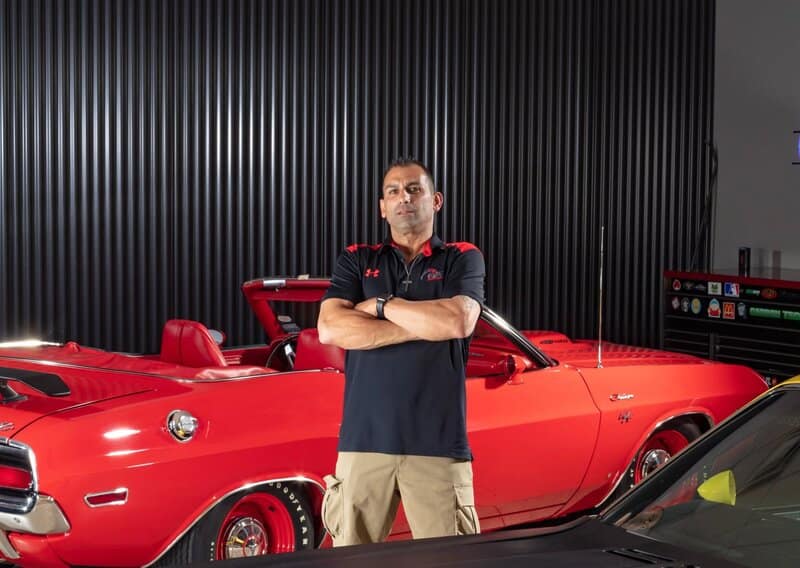
John Scatto Jr.
Owner & ARC Certified Master PDR Technician
John began his PDR career in 1993 and has dedicated over three decades to mastering the art and science of paintless dent repair. His certifications from the Alliance of Recreational Certification (ARC) represent the highest achievement in the PDR industry, credentials earned through rigorous testing and verified expertise.
As both an ARC Certified Master PDR Technician and an ARC Certified Hail Repair Master Technician, John has the documented skills to handle any PDR challenge. He's also passionate about sharing his knowledge through PDR training programs, helping aspiring technicians build careers in this rewarding field.
Our Team
RPM Dent Repair is a family business. John's nephew, Jon Bobillier, works alongside him as a PDR technician. A graduate of BC High and Chapman University, Jon learned PDR directly from John and brings the same commitment to quality that defines our shop.
Why Choose a Licensed PDR Shop Over Mobile Services
When searching for paintless dent repair providers, you'll find two main types of service: mobile PDR technicians who come to your location and shop-based PDR businesses like RPM Dent Repair. Both have their place, but understanding the differences helps you make the right choice for your specific situation.
The Advantages of Shop-Based PDR
A dedicated shop facility offers several important advantages. First, we have controlled lighting conditions. PDR technicians rely on specialized lighting to see dents clearly and monitor repair progress. Our shop has professional LED lighting systems that remain consistent regardless of weather or time of day. Mobile techs work with whatever lighting conditions exist at your location, which can compromise results.
Second, we have climate control. Metal behaves differently at different temperatures. In cold weather, panels are stiffer and more challenging to work. In extreme heat, the metal may be too pliable. Our shop maintains optimal working temperatures year-round. Mobile techs must adapt to whatever conditions they encounter.
Third, we have complete equipment access. Our shop contains every tool and piece of equipment we might need for any repair situation. Mobile techs can only carry what fits in their vehicle, which may mean they're not prepared for certain repair scenarios.
Fourth, we provide a dedicated work environment. In our shop, your vehicle is the complete focus. There are no distractions, no interruptions, and no pressure to work quickly because we're blocking your driveway. The relaxed, professional environment allows us to achieve the best possible results.
Insurance, Licensing, and Accountability
RPM Dent Repair is a fully licensed and insured business operating from a permanent location. This matters more than you might realize. If any issue arises with your repair, you know exactly where to find us. We're invested in our community and our reputation. A permanent shop represents a significant commitment that transient operations don't match.
Panel Materials: Steel, Aluminum, and High-Strength Steel
Modern vehicles use a variety of materials in their body panels, and these materials behave very differently during PDR. Understanding panel materials helps explain why some repairs are more complex than others.
Traditional Steel Panels
Most vehicles on the road today still use traditional steel for their body panels. Steel has predictable properties that make it generally straightforward for PDR. It has good "memory," meaning it wants to return to its original shape when the denting force is removed and appropriate counter-pressure is applied. Steel is forgiving of technique variations and responds well to standard PDR tools and methods.
Aluminum Panels
Aluminum is increasingly common in modern vehicles. The Ford F-150 switched to an aluminum body in 2015, and many luxury brands use aluminum extensively. Aluminum offers weight savings and corrosion resistance, but it presents unique PDR challenges.
Aluminum is softer than steel and has less memory. It can be more prone to work hardening, becoming more resistant to shaping as it's worked. Aluminum also scratches more easily than steel, requiring extra care to avoid tool marks. Most significantly, aluminum repairs require different technique timing and pressure application. A technician trained only on steel may struggle with aluminum.
John's ARC certification includes specific aluminum repair training and testing. We routinely repair aluminum panels on Ford trucks, European luxury vehicles, and other aluminum-bodied vehicles. Our shop sees significant demand for aluminum PDR as these vehicles become more common.
High-Strength Steel (HSS)
High-strength steel and ultra-high-strength steel (UHSS) are used in structural and safety-critical areas of modern vehicles. These materials are significantly harder than traditional steel, providing crash protection and structural rigidity. While HSS is less common in cosmetic body panels, it does appear in some applications.
Repairing dents in HSS requires more patience and specialized technique. The metal resists reshaping more than traditional steel. Repairs are possible but take longer and require careful approach to avoid creating additional stress in the material.
The Economics of PDR: Value Beyond Just Cost
When evaluating dent repair options, it's important to consider the full picture of value, not just the immediate repair cost. PDR typically offers economic advantages that extend well beyond the service price.
Vehicle Value Preservation
Your vehicle's resale or trade-in value depends partly on its history. Vehicles with body work on their history reports are worth less than equivalent vehicles without such history. When you sell or trade your vehicle, "Has the vehicle had body work?" is a standard question. A "yes" answer reduces value.
PDR preserves your vehicle's "no body work" status because PDR isn't body work. It's dent repair that leaves the factory finish intact. There's nothing to report, nothing to disclose, nothing to reduce value. For vehicles you plan to sell or trade, this preservation of clean history has real monetary value.
Time Value
Traditional body shop repair takes days. During that time, you need alternative transportation. Rental car costs, rideshare expenses, or simply the inconvenience of coordinating rides all have value. PDR's faster turnaround eliminates or greatly reduces these secondary costs.
Quality Considerations
When body shops repaint panels, they're trying to match factory paint that may be years old. Perfect color matching is difficult, and mismatches often become more apparent over time as paints age differently. The repainted area may look perfect initially but develop visible differences years later.
With PDR, there's no color matching concern because the original paint remains untouched. The repair will look as good in ten years as it does today because the factory finish ages naturally and uniformly.
Paintless Dent Repair FAQ
Answers to common questions about PDR services
What is paintless dent repair?
Paintless dent repair (PDR) is a specialized technique that removes dents from vehicle panels without damaging the factory paint finish. PDR technicians use specialized metal tools to carefully massage the dented metal back to its original shape from behind the panel. This preserves your original factory paint, maintains vehicle value, and typically costs less than traditional body shop repairs.
What types of dents can PDR fix?
Paintless dent repair can fix most dents where the paint hasn't been cracked or chipped. This includes door dings, hail damage, minor collision dents, shopping cart damage, and acorn damage. The key factors are paint condition and access to the back of the panel. Very sharp creases or dents on panel edges may have limitations. Send us photos through our free estimate form for assessment.
How long does paintless dent repair take?
Repair time varies based on damage complexity. A single door ding typically takes 30 minutes to 1 hour. Multiple dents or hail damage may require several hours to a full day. Factors affecting repair time include dent depth, location, panel material, and whether R&I (remove and install) work is needed to access the damage. We provide time estimates with every quote.
Does insurance cover paintless dent repair?
Yes, most insurance companies cover PDR for comprehensive claims like hail damage. RPM Dent Repair works directly with all major insurance carriers and handles the claims process. For hail damage, PDR is actually preferred by many insurers because it preserves the factory finish and typically costs less than conventional repair.
What factors determine paintless dent repair pricing?
Paintless dent repair pricing is based on the specific characteristics of each dent: actual size and depth of the damage, panel material (aluminum and high-strength steel require specialized techniques), whether the dent is on a body line or double panel, and any R&I (remove and install) work needed to access the damage. We provide personalized quotes after assessing photos or seeing the vehicle.
Is paintless dent repair better than traditional body shop repair?
For qualifying dents where paint is intact, paintless dent repair offers significant advantages: it preserves your original factory paint (maintaining vehicle value), typically costs less, takes less time, and is environmentally friendly. Traditional body work is necessary only when paint is damaged or for severe collision damage requiring structural repair.
Can paintless dent repair fix aluminum panels?
Yes, RPM Dent Repair specializes in aluminum panel repair. Aluminum (used in Ford F-150s and many luxury vehicles) requires different techniques than steel due to its unique properties. John Scatto Jr.'s ARC certification includes specific training in aluminum repair. We regularly repair aluminum hoods, doors, and fenders.
Do you offer paintless dent repair training?
Yes, RPM Dent Repair offers paintless dent repair training programs taught by John Scatto Jr. Training options range from introductory courses for beginners to advanced techniques for experienced technicians. Learning PDR from an ARC Certified Master Technician with 33+ years of experience provides unmatched foundation for a PDR career.
How do I get a paintless dent repair estimate?
The easiest way to get an estimate is to submit photos through our free estimate form. Include photos showing the damage from multiple angles in good lighting. We respond within 24 hours with a personalized quote. You can also call (508) 952-9554 or visit our shop at 244 N Main St, Suite 6, Raynham, MA for in-person assessment.
What areas do you serve?
RPM Dent Repair provides paintless dent repair services within a 75-mile radius from our Raynham, MA shop. This includes Boston, Brockton, Taunton, Plymouth, Cape Cod, Fall River, New Bedford, Providence RI, and all communities in between. Our central location on Route 138 makes us accessible from anywhere in southeastern Massachusetts or northern Rhode Island. See our full service area below.
Paintless Dent Repair Service Area
Communities we serve from our Raynham shop
Don't see your town? We likely serve your area. Contact us to confirm.
Getting Started: Your Next Steps
If your vehicle has dents, dings, hail damage, or other damage that might qualify for paintless dent repair, getting started is simple. Here's what we recommend:
Step 1: Document the damage. Take clear photos of each dent in good lighting. Try to capture images that show the dent's size, depth, and location on the panel. Include a reference object like a coin if that helps show scale. Multiple angles are helpful.
Step 2: Submit for assessment. Send your photos through our free estimate form. Include information about your vehicle (year, make, model) and any other relevant details. If you know your panel material (steel or aluminum), mention that too.
Step 3: Receive your personalized quote. We'll review your photos and respond within 24 hours during business hours with an assessment and quote. We'll let you know if the damage is a good PDR candidate, approximately how long the repair will take, and what to expect.
Step 4: Schedule your repair. Once you're ready to proceed, we'll schedule your repair at a time that works for you. For insurance claims, we'll coordinate with your insurance company.
You can also call us directly at (508) 952-9554 to discuss your damage, or stop by our shop at 244 N Main St, Suite 6, Raynham, MA for an in-person assessment. We're here Monday through Friday 7:30am to 5:30pm and Saturday 8:00am to 2:00pm.
Learn PDR: Training Programs Available
Interested in learning paintless dent repair yourself? RPM Dent Repair offers comprehensive PDR training programs taught by John Scatto Jr. With 33+ years of experience and ARC Master Certification, John provides unmatched instruction for those wanting to enter the PDR industry.
PDR offers attractive career opportunities. Skilled technicians are in demand, the work is satisfying (transforming damaged vehicles to perfect condition), and the business can be operated as an employee, independent contractor, or business owner. Many PDR technicians earn excellent incomes with flexibility and job satisfaction that traditional employment often lacks.
Our training programs cover fundamental techniques and tool usage, reading and interpreting dent structures, access point identification and R&I procedures, steel and aluminum repair differences, business aspects of PDR operation, and hands-on practice with real vehicles. Whether you're considering PDR as a career change, adding services to an existing auto business, or pursuing a new entrepreneurial path, our training provides the foundation for success.
Why RPM Dent Repair: Massachusetts PDR Leaders
When you choose RPM Dent Repair, you're choosing a business built on expertise, integrity, and commitment to excellence. Our combination of credentials, experience, and dedication sets us apart as the premier PDR provider in Massachusetts.
Verified expertise: John Scatto Jr.'s ARC certifications aren't participation trophies. They represent tested, verified skill at the highest levels of the PDR profession. You can verify his credentials directly through the ARC certification database.
Decades of experience: With PDR experience dating to 1993, John has seen and repaired virtually every type of dent situation imaginable. This depth of experience means we can handle your repair with confidence, whatever challenges it presents.
Licensed shop facility: Our permanent shop location demonstrates our commitment to this community and this profession. We're not a fly-by-night operation. We're an established business with roots in Raynham.
Customer focus: Our 5-star Google rating reflects our commitment to every customer's satisfaction. We take pride in delivering results that exceed expectations and building relationships with customers who return whenever they need PDR services.
Training and education: As the only PDR shop in the region offering training programs, we're invested in advancing the PDR profession, not just practicing it. This educational focus keeps us current with evolving techniques and best practices.
We invite you to experience the RPM Dent Repair difference. Whether you have a single door ding or extensive hail damage, our shop has the skills, equipment, and commitment to restore your vehicle to perfect condition.
Ready for Expert Paintless Dent Repair?
Get your free estimate today or call us directly. We respond within 24 hours during business hours.
Wait! Get Your FREE Dent Assessment
Before you go, let us give you a personalized quote
- Free assessment within 24 hours
- No obligation
- Insurance claim assistance included
No thanks, I'll pay full body shop prices


